A standard DUI charge is a significant legal problem, but it is usually a manageable one with a predictable set of consequences. The true danger arises when the District Attorney reviews your police report and decides your case is not standard.
They look for specific details: a high number on a breath test strip, a passenger in the back seat, or a refusal to cooperate with the officer. These details are not just background facts. They are legal ammunition. The prosecutor uses them to file special allegations or enhancements alongside the primary DUI charge.
You need a San Diego DUI defense lawyer who understands that these enhancements are often the weakest part of the state’s case.
Elite Criminal Defense attacks the factual basis of these allegations to strip away the enhanced penalties and return the case to a level where we can fight for a dismissal or a favorable resolution.
The Multiplier Effect
- The Punishment Exceeds the Crime. Aggravating factors can triple the standard penalties for a first-time DUI. A case that normally warrants probation can suddenly carry a mandatory 60-day jail sentence solely because of a speeding allegation.
- Negotiation Becomes a Battle for Drops. The primary strategic goal often shifts from fighting the DUI charge itself to fighting the enhancement. Striking the allegation is often the key to unlocking a probation-only offer.
- Judicial Discretion is Limited. Many enhancements carry mandatory minimum sentences written directly into the California Vehicle Code. If the allegation stands, the judge has no legal authority to show leniency. The defense must defeat the allegation to free the judge’s hands.
The Legal Mechanism of Sentencing Enhancements
California law structures DUI penalties in tiers. The base statutes, Vehicle Code 23152(a) and (b), set the standard range for probation, fines, and license suspensions. The legislature, however, created a secondary layer of laws designed to punish conduct they view as particularly reckless. These are known as sentencing enhancements or special allegations.

The prosecutor attaches these allegations to the criminal complaint. You are not just charged with DUI; you are charged with DUI plus the allegation. This structure means the prosecutor must prove the allegation beyond a reasonable doubt to a jury, just like the underlying crime.
This requirement creates a vital opening for the defense. We do not have to prove you were sober to defeat an enhancement. We only have to prove that the specific factual requirement of the enhancement, such as the specific speed you were driving or your specific blood alcohol concentration, was not met.
Excessive Blood Alcohol Content: The 0.15% Threshold
The most common aggravating factor is a high blood alcohol content (BAC). While the legal limit is 0.08%, the penalties ramp up significantly as that number climbs.
The Statutory Enhancements under Vehicle Code 23578
California Vehicle Code § 23578 gives the court the authority to impose harsher penalties if a driver’s BAC is 0.15% or higher, and even more severe penalties if it reaches 0.20%.
Prosecutors view a high BAC as evidence that a driver has a high tolerance for alcohol, suggesting a serious substance abuse problem that requires a punitive response.
Consequences of the High BAC Allegation
If you admit to this allegation, or if a jury finds it true, the consequences ripple through every part of your sentence. The most immediate impact is on the DUI education program.
A standard first DUI requires a three-month class (AB 541). A high BAC allegation triggers a requirement for a six-month or nine-month class (AB 1353). This triples the cost and the time commitment.
The court is also likely to order the installation of an Ignition Interlock Device (IID) for a longer period and may require you to attend Alcoholics Anonymous (AA) meetings or perform Public Work Service (physical labor like picking up trash) instead of paying a simple fine.
Attacking the Science of the High Number
We defeat this enhancement by attacking the accuracy of the chemical test. Breathalyzers have a margin of error. A reading of 0.15% is on the razor's edge. We analyze the calibration logs of the machine.
If the machine was reading slightly high during its maintenance checks, we can argue that your true BAC was actually 0.13% or 0.14%. This scientific attack can force the prosecutor to strike the 0.15% allegation, saving you from the nine-month class and the harsher probation terms.
Refusal to Submit to a Chemical Test
Refusing a breath or blood test after a lawful arrest is a decision that carries immediate and severe consequences. The state punishes the act of refusal separate from the act of driving under the influence.
The Mandatory Jail Sentence
Under Vehicle Code 23577, a refusal adds mandatory jail time to your sentence. For a first offense, it adds 48 continuous hours in county jail. For a second offense, it adds 96 hours. For a third DUI offense, it adds 10 days. The judge cannot stay or suspend this time. If the refusal allegation is proven, you will go to jail.
The Hard License Suspension
The DMV penalty for a refusal is draconian. A standard DUI allows you to get a restricted license to drive to work. A refusal triggers a one-year hard suspension for a first offense. You cannot drive anywhere, for any reason, for 365 days. A second refusal results in a two-year revocation. This penalty can cost you your job and your livelihood.
Challenging the Officer’s Admonishment
The defense against a refusal allegation focuses on the officer's conduct. The law requires the officer to read a specific admonishment explaining the consequences of refusal.
We scrutinize the body camera footage. Did the officer read the form correctly? Did they confuse you by giving legal advice? Did a language barrier prevent you from understanding the warning? If the officer failed to make the consequences clear, your refusal was not willful, and the allegation must be dismissed.
Reckless Driving and Speeding Enhancements
Driving fast while under the influence is a dangerous combination, and the legislature has created a specific, harsh penalty for it under Vehicle Code 23582. This is often called the speed enhancement.
The Specific Criteria for the Enhancement
This enhancement applies if you drive 30 mph or more over the speed limit on a freeway, or 20 mph or more over the limit on a surface street. It creates a mandatory, consecutive 60-day jail sentence.
This means if the judge sentences you to probation for the DUI, you must still serve 60 days in jail for the speeding. It also requires you to complete a drug and alcohol education program.
Challenging the Speed Measurement
Police officers often estimate speed or use pacing techniques rather than radar or lidar. These methods are prone to error. We challenge the officer’s measurement. We demand the calibration records for the speedometer of the patrol car.
We analyze the dash-cam footage to calculate speed based on fixed points. If we can prove you were driving 29 mph over the limit instead of 30, the enhancement falls apart. The difference of one mile per hour saves you 60 days in jail.
Child Endangerment: The Most Emotional Aggravating Factor
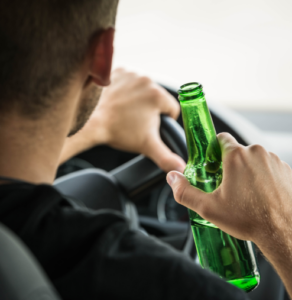
Driving under the influence with a minor in the vehicle is one of the most serious accusations a driver can face. It triggers legal consequences in criminal court and family court.
Penal Code 273a vs. Vehicle Code 23572
The prosecutor has two ways to charge this conduct. They can add a sentence enhancement under Vehicle Code 23572 if the passenger was under 14. This adds mandatory jail time—48 hours for a first offense, up to 90 days for a fourth offense.
“A more aggressive prosecutor will file a completely separate criminal charge under Penal Code 273a, Child Endangerment. This offense can be charged as a misdemeanor or a felony, often elevating the case to a DUI felony charge with far more severe consequences. A conviction under this statute carries a mandatory minimum of 90 days in jail and requires you to complete a 52-week child abuser treatment program. It creates a criminal record that labels you a danger to children.”
Child Protective Services Involvement
A DUI arrest with a child in the car triggers an automatic report to Child Protective Services (CPS). Social workers will open an investigation into your fitness as a parent. They have the power to remove your children from your home.
We coordinate your defense to protect you on both fronts. We fight criminal charges to prevent a conviction that CPS could use against you, and we help you demonstrate to the court and social workers that you are a responsible parent who made a one-time mistake.
DUI Causing Injury: The Felony Wobbler
If you are involved in an accident while under the influence and another person suffers an injury, the case is elevated to a felony under Vehicle Code 23153. This is a wobbler, meaning the prosecutor can file it as a misdemeanor or a felony.
The Great Bodily Injury (GBI) Strike
The severity of the charge depends on the severity of the injury. If the injury is minor, such as soft-tissue pain, we fight to keep the charge a misdemeanor. If the injury is serious, such as a broken bone or a concussion, the prosecutor will allege Great Bodily Injury (GBI) under Penal Code 12022.7.
A GBI allegation adds three consecutive years to your prison sentence and turns the DUI into a violent felony strike under California’s Three Strikes Law. This means you will serve 85% of your sentence and face a potential life sentence for any future felony.
Challenging the Cause of the Accident
A conviction under VC 23153 requires the prosecutor to prove your impaired driving caused the injury. Being drunk and involved in an accident is not enough if the other driver was at fault.
We employ accident reconstruction experts to analyze the scene, the vehicle damage, and the skid marks. If we can prove the other driver ran a red light or drifted into your lane, you are not guilty of DUI causing injury, regardless of your BAC.
Frequently Asked Questions About Aggravating Factors
Can I Get an Enhancement Dropped Even if it is True?
Yes. Plea bargaining involves compromise. A prosecutor may agree to dismiss a speeding enhancement or a high BAC allegation in exchange for a guilty plea to the underlying DUI. This allows them to secure a conviction without the risk of a trial, and it saves you from the mandatory jail time associated with the enhancement. Our reputation for fighting cases gives us the leverage to secure these deals.
Does a Refusal Automatically Mean I Go to Jail?
Not necessarily. While the statute mandates jail time for a refusal, a skilled criminal defense attorney can often negotiate a resolution where the refusal allegation is dismissed or the jail time is served through alternative means, such as house arrest or a work furlough program. The outcome depends heavily on the specific facts of the stop and the strength of the defense we build.
How Does a Child Endangerment Charge Affect My Custody Rights?
A conviction for child endangerment can be used against you in family court to restrict your custody or visitation rights. It creates a presumption that you are a detriment to the child.
However, if we can get the charge reduced to a simple DUI without the endangerment enhancement, or negotiate a diversion outcome, we can protect your standing in family court.
Is a 0.15% BAC Always Charged as an Enhancement?
The policy varies by county, but in San Diego, the District Attorney’s office is very aggressive about charging this enhancement. They will almost always include it if the chemical test result supports it.
However, the breathalyzer's margin of error means a 0.15% reading is not definitive proof. We attack the science to bring the number down.
Your Defense Against Enhanced Penalties
The prosecutor has added every possible enhancement to your case to intimidate you. They want you to look at the potential jail time and lose hope. You must do the opposite. You must fight back with a sophisticated defense that targets the specific legal and factual requirements of each allegation.

The attorneys at Elite Criminal Defense have a 20-year history of dismantling aggravated DUI cases. We have secured probation for clients facing prison, saved licenses in refusal cases, and protected parents from child endangerment charges.
We know how to strip a case of its enhancements and fight for a fair result. Contact us now through our secure online form for free, urgent, and completely confidential consultation.